

School Staff - Science of Comfort Summary
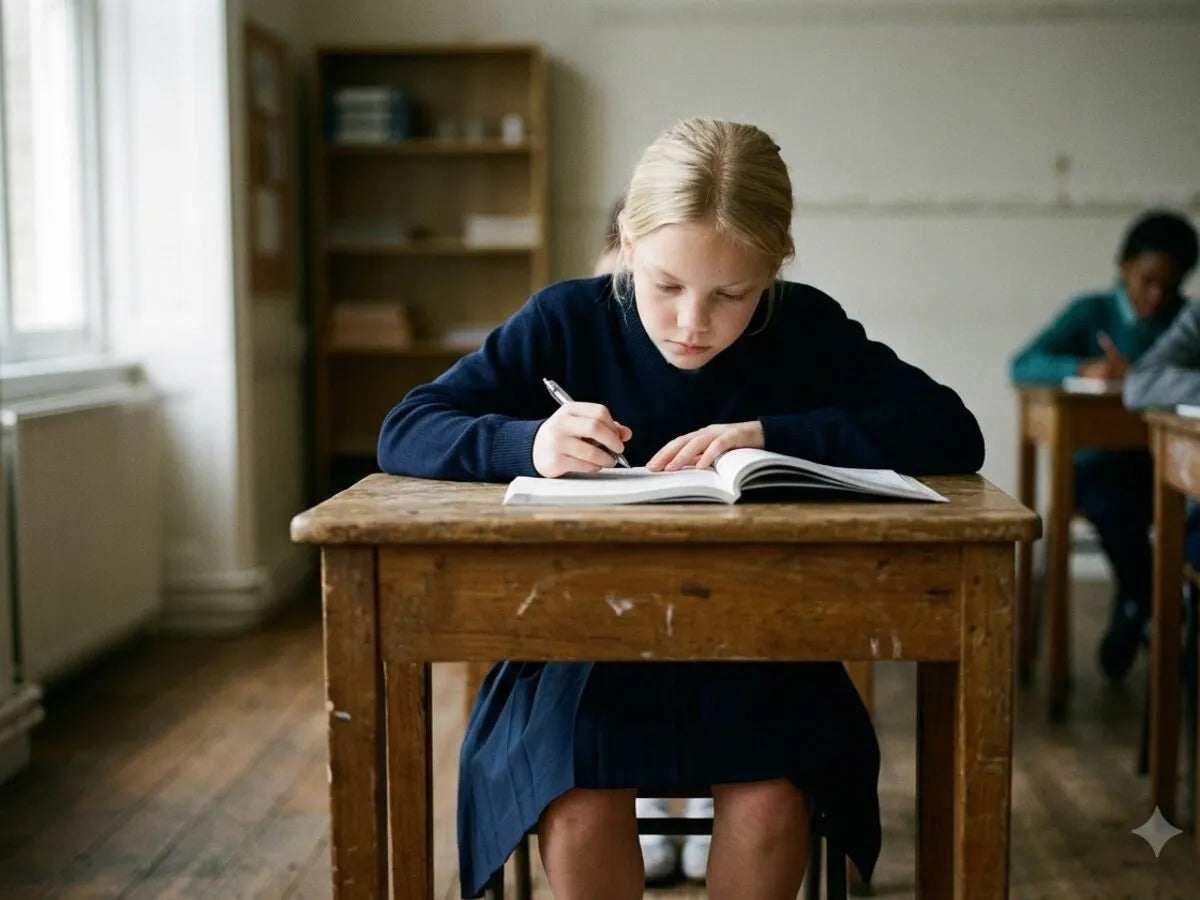
“Children use significant mental energy trying to ignore how their clothes feel. It makes it harder to pay attention and follow instructions, and can lead to difficult behaviour.”
NHS Occupational Therapy Guidance, Bedfordshire and Luton Children's OT Service
And that is the tip of the iceberg. There is a remarkable amount of research on this, and we have compiled all of it. A sample:
The evidence
A sample of what the research shows
In a University of Massachusetts study, a third of the difference in students' academic results lined up with how hot or cold they were in their clothes. Put simply: uncomfortable children underperform on the day.
University of Massachusetts
Children in the largest review ever done of uniforms and activity, which found that uniforms designed for movement mean more active children, especially girls.
Frontiers in Sports and Active Living, 2025
Between 5% and 16% of children experience real sensory distress from clothing. For those children, the NHS guidance above is not background discomfort. It is their whole morning.
NHS and sensory processing research
What this asks of you: almost nothing
Flydays builds uniforms around this research: natural-fibre and performance fabrics, four-way stretch, under-shorts with every skirt, hems that grow with the child, at the same price parents pay now or less. Made in the factory that produces for Olympic squads, Puma and Adidas.
We come to you, walk you through the research, and show you the uniform. If you like it, we produce a sample set in your school's colours, free and with no obligation.
Parents order directly from us, so there is never admin, stock or money passing through the school.
The full research, with every citation, is at the Science of Comfort.
Next step
Arrange a visit
Tell us where you are and we will take it from there.
