

15,120 hours
in a school uniform
14 years × 180 school days × 6 hours a day
Is your school in?
We will send you a simple one-page summary to your WhatsApp.
Register and we'll send the research to share with your school community.

The Science of Comfort
What follows are bold claims about school uniforms. Every one of them is backed by peer-reviewed research from universities, medical institutions, and independent academic journals.
The sources include researchers from the University of Cambridge, the University of Massachusetts, NHS Occupational Therapy Services, and the Family and Consumer Sciences Research Journal. They are cited in full. Every study is linked. The conclusion they reach, independently and consistently, is the same: what a child wears to school affects how well they learn, how they behave, and how much they move.
School uniforms, as they are currently designed, were not built with any of this in mind. Flydays was.
There’s a lot here. If you’d rather have the short version for the parents’ WhatsApp group, we’ll send you the one-page summary.
What the research shows
Five findings every parent should know
-
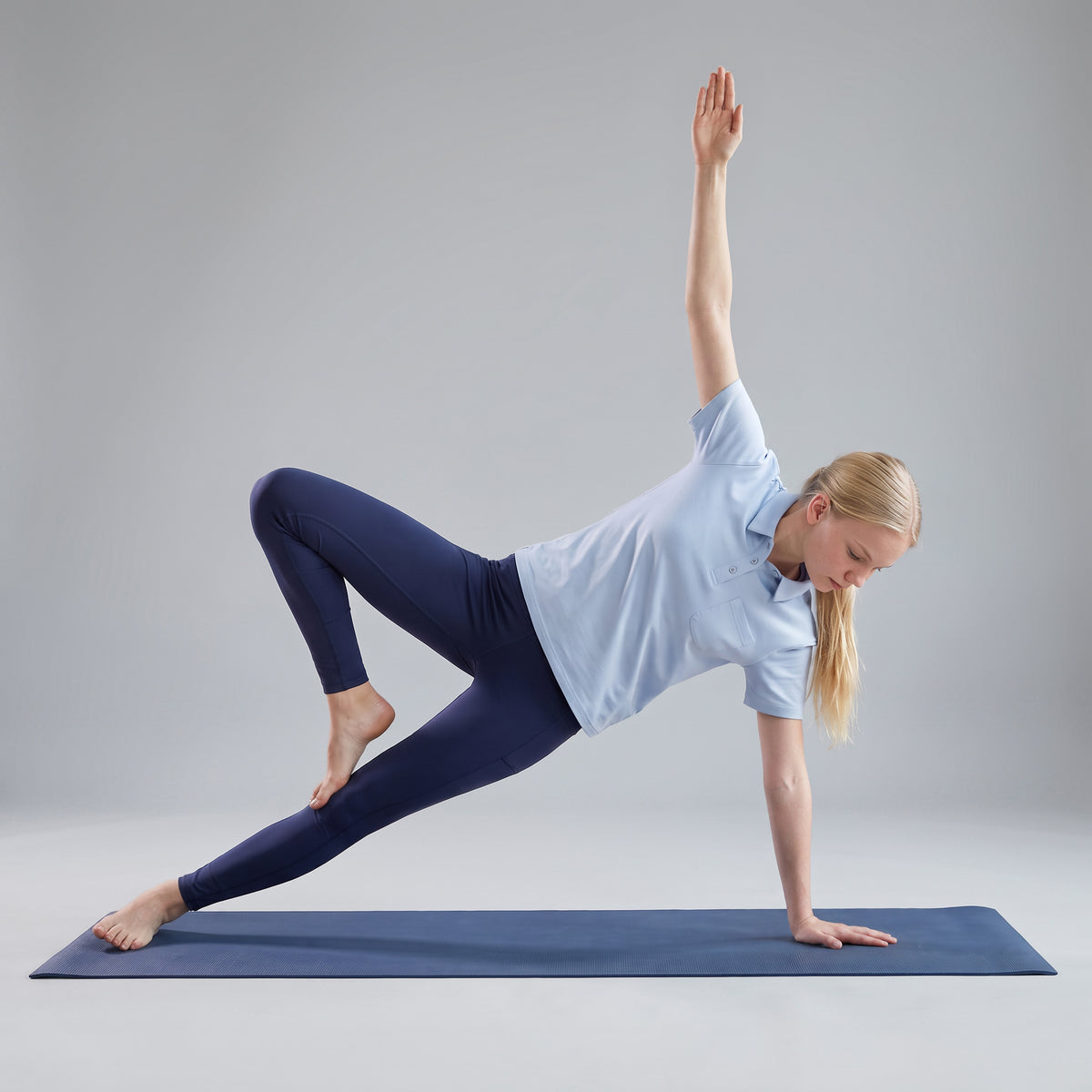
“Uncomfortable fabrics reduce attention and reaction speed.”
FCS Research JournalBell, Schutz & Cardello“Uncomfortable fabrics reduce attention and reaction speed.”
FCS Research Journal · Bell, Schutz & CardelloParticipants wore different fabrics and completed attention tasks. Those in softer materials performed better and felt more at ease. Scratchy fabrics reduced both reaction speed and concentration.
Read the full study -
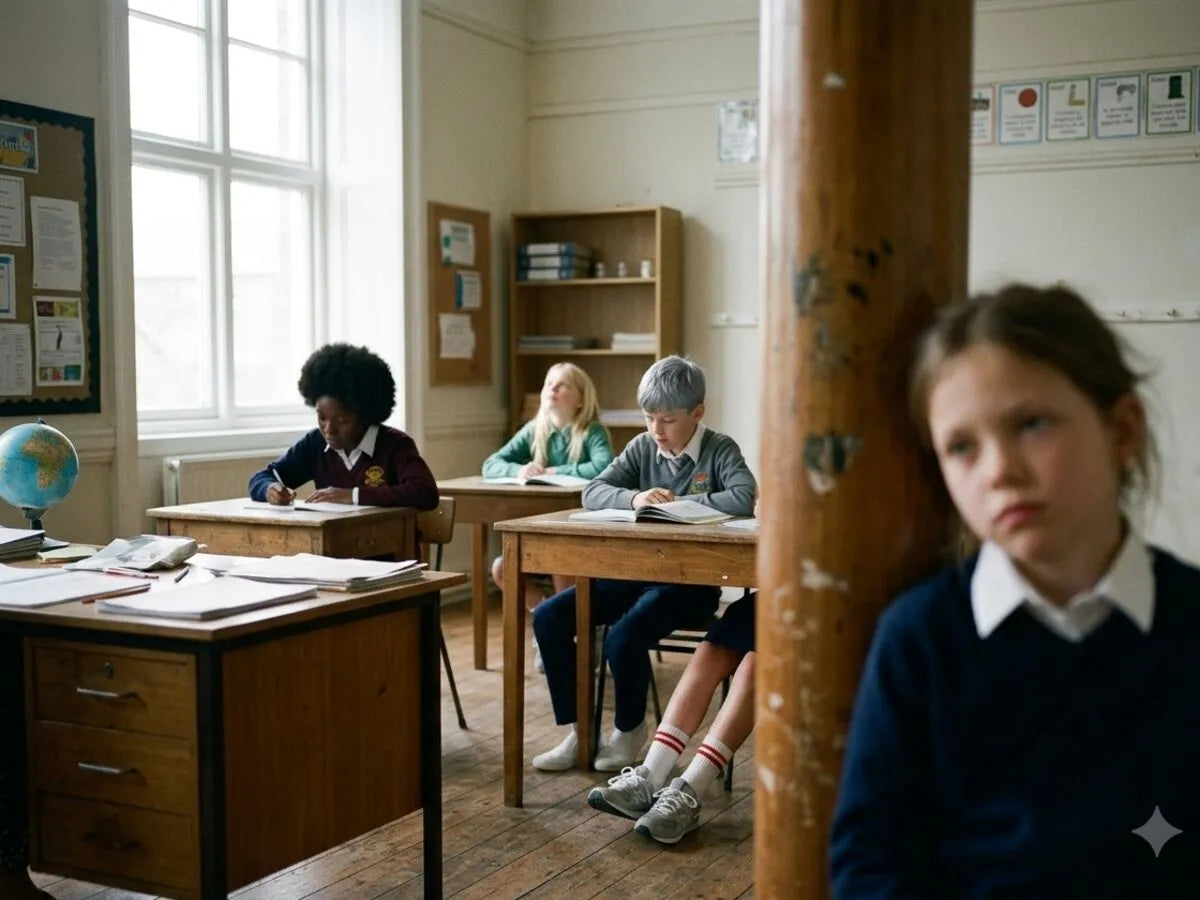
“Children use significant mental energy trying to ignore how their clothes feel.”
NHSChildren’s Occupational Therapy Service“Children use significant mental energy trying to ignore how their clothes feel.”
NHS · Children’s Occupational Therapy ServiceThe NHS guidance for parents is blunt: constant clothing discomfort makes it harder for a child to pay attention and follow instructions, and can lead to difficult behaviour and meltdowns as they try to cope with the stress of their clothes.
Read the NHS guidance -
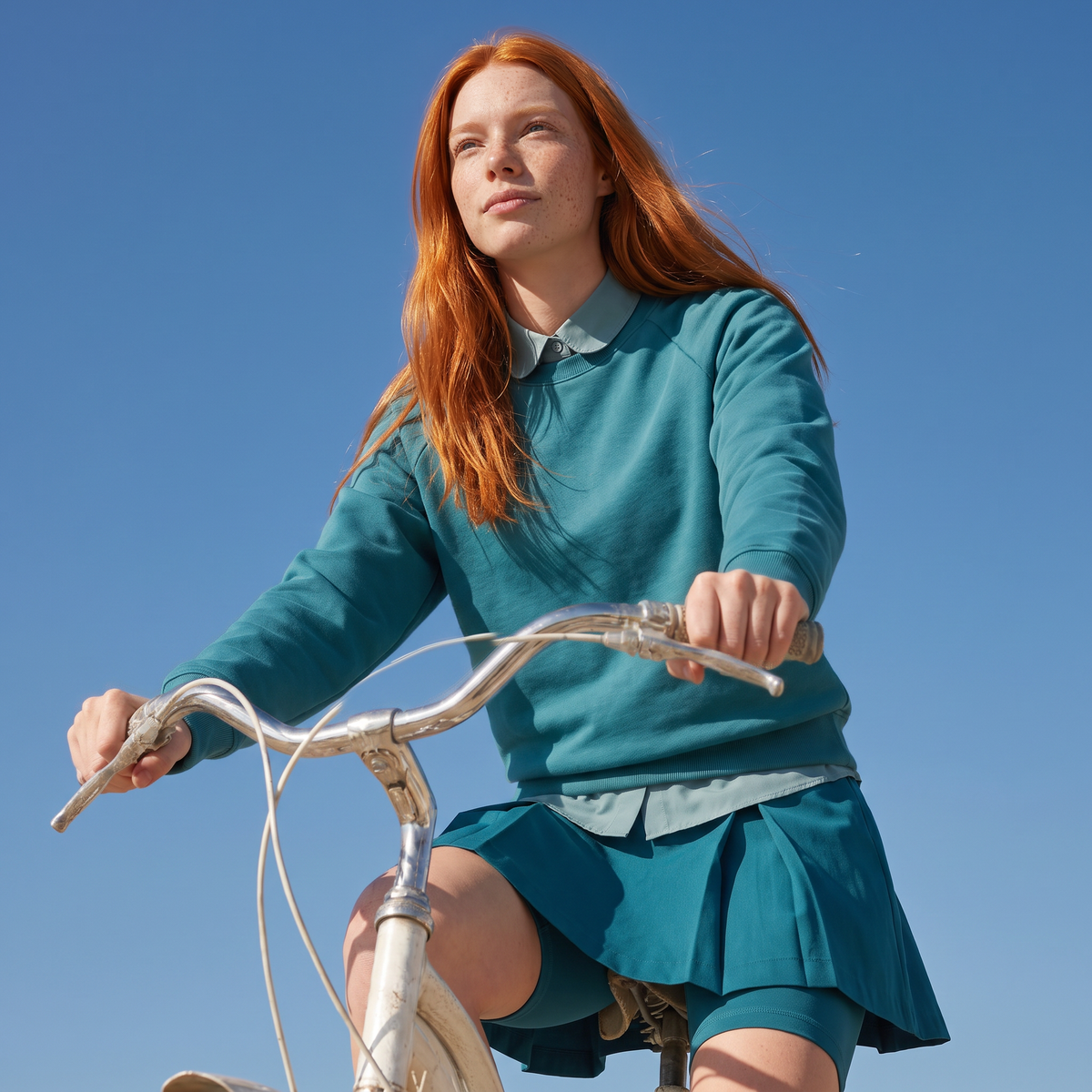
“Girls feel less confident doing cartwheels or cycling to school if they are wearing a [school] skirt or dress.”
University of CambridgeDr Esther van Sluijs“Girls feel less confident doing cartwheels or cycling to school if they are wearing a [school] skirt or dress.”
University of Cambridge · Dr Esther van SluijsA study across 135 countries found that in places where school uniforms are common, girls are significantly less likely to meet daily physical activity targets. The gender gap in those countries is nearly twice as large as in countries without uniforms.
Read the full study -
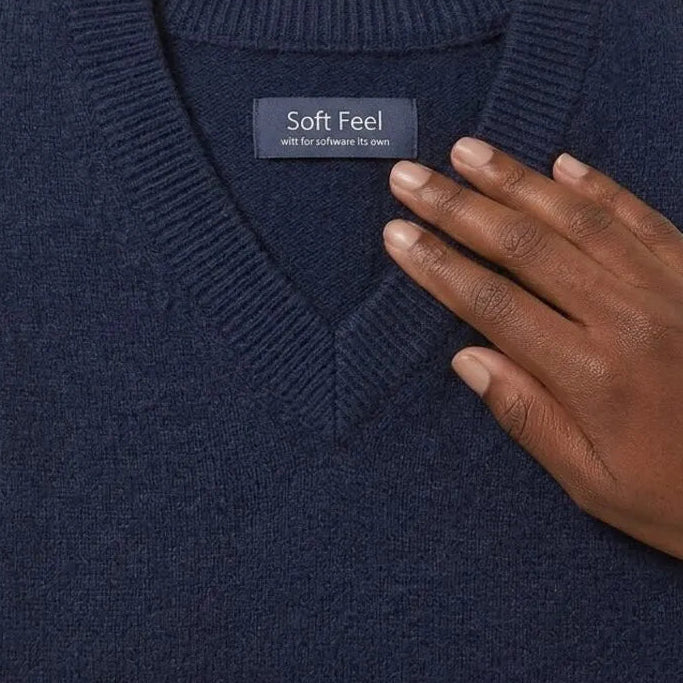
“Children preferred second-hand uniforms - repeated washing softens fabric over time. The new uniform is often the hardest one to wear.”
University of PretoriaJordaan et al., 2024“Children preferred second-hand uniforms - repeated washing softens fabric over time. The new uniform is often the hardest one to wear.”
University of Pretoria · Jordaan et al., 2024A 2024 study from the University of Pretoria identified exactly which uniform properties cause children the most distress: rough fibre texture, tight fit, scratchy seams, stiff collars and elastic waistbands. Children preferred the softened, many-times-washed second-hand uniform over the new one.
Read the full study -
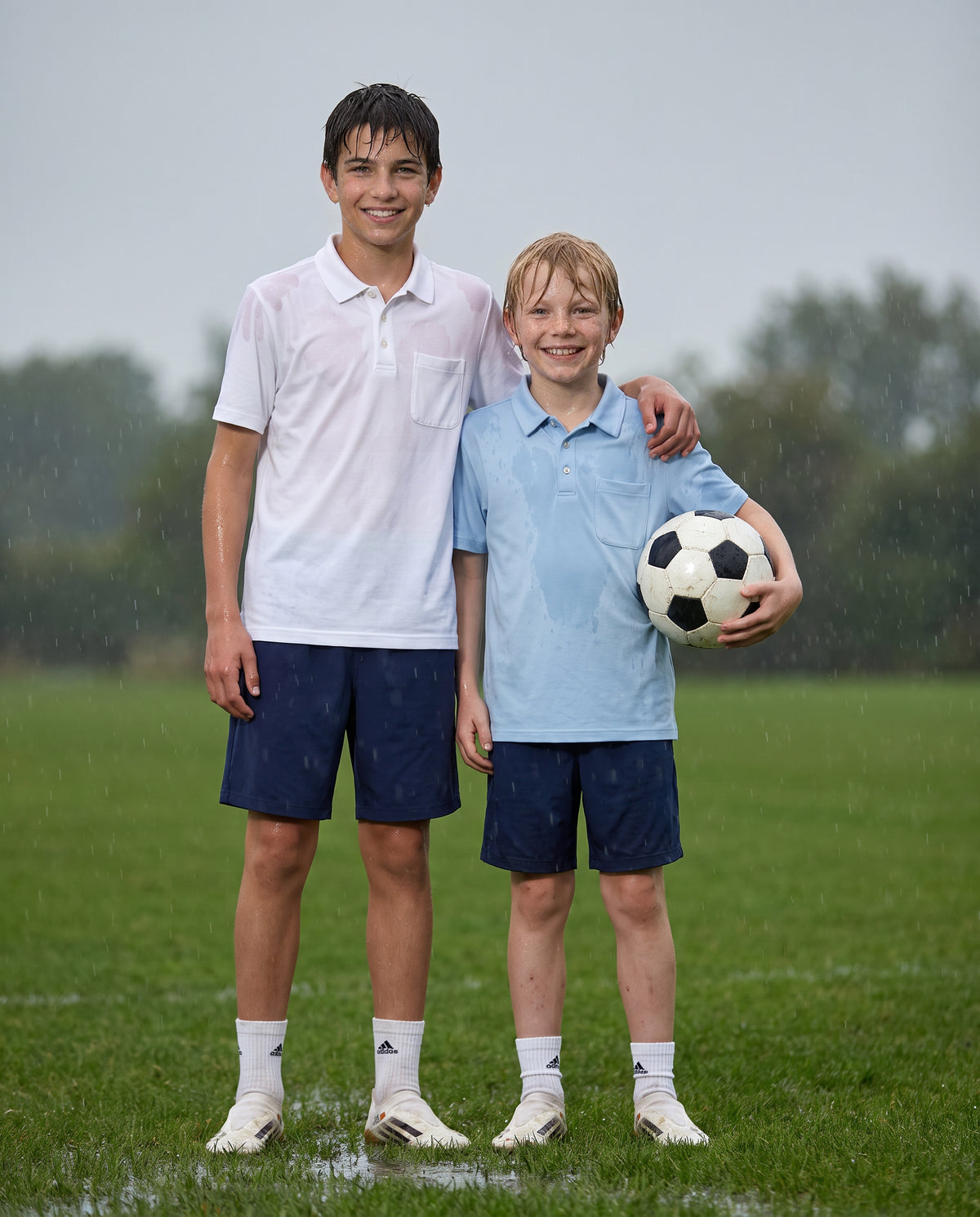
“Over half of Irish secondary students say their uniform is a barrier to physical activity.”
University of LimerickO’Keeffe et al. · European Physical Education Review“Over half of Irish secondary students say their uniform is a barrier to physical activity.”
University of Limerick · O’Keeffe et al. · European Physical Education Review1,439 students across 18 Irish secondary schools. Uniforms were a barrier for 54.5% of students during PE and 58.1% outside PE lessons; 66% of girls disliked doing PE in uniform.
Read the full study
Cognitive performance
Two studies by the same research team form the core of what we know about clothing comfort and academic performance. Both are worth reading in full. A third establishes just how strongly physical comfort and results are linked.

01 Clothing comfort and exam performance
“Clothing that fits well, feels good, and allows free movement contributes to improved concentration and reduced anxiety.”
Bell, Schutz & Cardello · Family and Consumer Sciences Research Journal
“Students who described their clothing as more comfortable also reported feeling less tense and more confident.”
Bell, Schutz & Cardello
“The data suggest that clothing comfort, whether physical or psychological, can influence mental performance under stress.”
Bell, Schutz & Cardello
“Perceived comfort explained approximately 8% of the variance in exam performance scores.”
Bell, Schutz & Cardello (a significant independent effect, distinct from study habits, confidence or sleep)
02 Fabric comfort and visual vigilance
“Uncomfortable fabrics reduce attention and reaction speed.”
Bell, Schutz & Cardello · Family and Consumer Sciences Research Journal
“Clothing comfort while wearing a school uniform has been found to have a direct influence on academic performance.”
Bell, Schutz & Cardello
“If the school uniform contributes to sensory overstimulation and prevents the child from being in a calm and alert state, it can directly affect the child’s education.”
Bell, Schutz & Cardello
03 Classroom comfort and learning outcomes
“Students who felt thermal discomfort performed worse on tests than those with no thermal discomfort. Approximately 34% of the variance in performance was accounted for by thermal discomfort - a large effect.”
Hoque & Weil, 2016 · University of Massachusetts Amherst
Sensory sensitivity
Some children who present as disruptive or inattentive are not experiencing a behavioural problem. They are experiencing a sensory one. The uniform is a contributing cause. It is also, unlike many causes of classroom disruption, something a school can directly control.
For an estimated 5-16% of children, a poorly designed uniform is not an inconvenience. It is a daily source of genuine distress.

Sensory processing differences, common in children with ADHD, autism, and related neurodivergencies, mean that fabric textures, seam placement, tight waistbands, and scratchy labels can create persistent sensory overload throughout the school day. That overload has a direct effect on behaviour.
“Clothes have a huge impact on your child or young person’s day-to-day life. Your child may be using a lot of mental energy trying to ignore how their clothes feel. This constant discomfort makes it harder to pay attention and follow instructions. It can lead to difficult behaviour and meltdowns as they try to cope with the stress of their clothes.”
NHS UK · Bedfordshire and Luton Children’s Occupational Therapy Service
“Clothing tags, seams, and certain fabric types can feel unbearably irritating, overwhelming children’s sensory systems.”
Child Mind Institute · Understanding Sensory Issues in Children
04 School uniforms and sensory overreactivity
“Rough fibre textures, tight fits, scratchy seams, stiff collars, and embroidery were among the most distressing properties identified.”
Jordaan, Diedericks, van Niekerk & Kruger, 2024 · Clothing and Textiles Research Journal
“Children preferred second-hand uniforms - repeated washing softens fabric over time. The new uniform is often the hardest one to wear.”
Jordaan, Diedericks, van Niekerk & Kruger, 2024
Girls, uniforms, and physical activity
The research on girls and uniform design is among the most consistent in this field. From primary school playgrounds in Ireland to a 135-country global study, the finding is the same: the clothes girls are required to wear to school directly reduce how much they move.
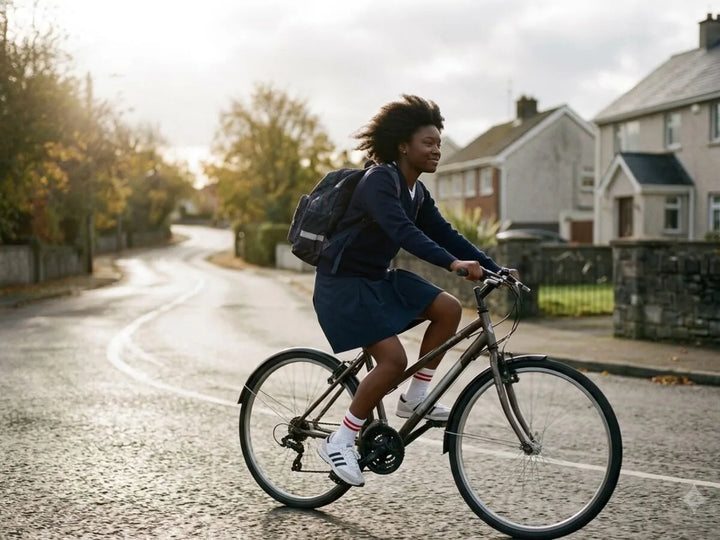
05 School uniforms and physical activity: 135 countries
“Restrictive uniforms could be preventing primary school pupils, especially girls, from being physically active.”
Dr Mairead Ryan · University of Cambridge
“Girls might feel less confident doing things like cartwheels and tumbles in the playground, or riding a bike on a windy day, if they are wearing a skirt or dress. Social norms and expectations tend to influence what they feel they can do in these clothes. Unfortunately, when it comes to promoting physical health, that’s a problem.”
Dr Esther van Sluijs · University of Cambridge
06 School uniform as a public health issue
“Girls are significantly more active on days when they wear sports uniforms compared to formal school uniform days.”
Reidy, 2021 · Public Health Reviews
“Females’ health is routinely and arbitrarily disadvantaged by uniform design.”
Reidy, 2021 · Public Health Reviews
07 Systematic review: 1,098,972 children
“A systematic review of 1,098,972 children found that sports and activity-enabling uniforms are consistently associated with higher levels of physical activity - particularly for girls.”
Frontiers in Sports and Active Living, 2025
Source link to follow. [07]
08 The AWARE randomised controlled trial: 42 schools
“Activity-enabling uniforms significantly reduced sedentary time across the school day.”
Nathan et al., 2021 · AWARE RCT, 42 schools
Source link to follow. [08]
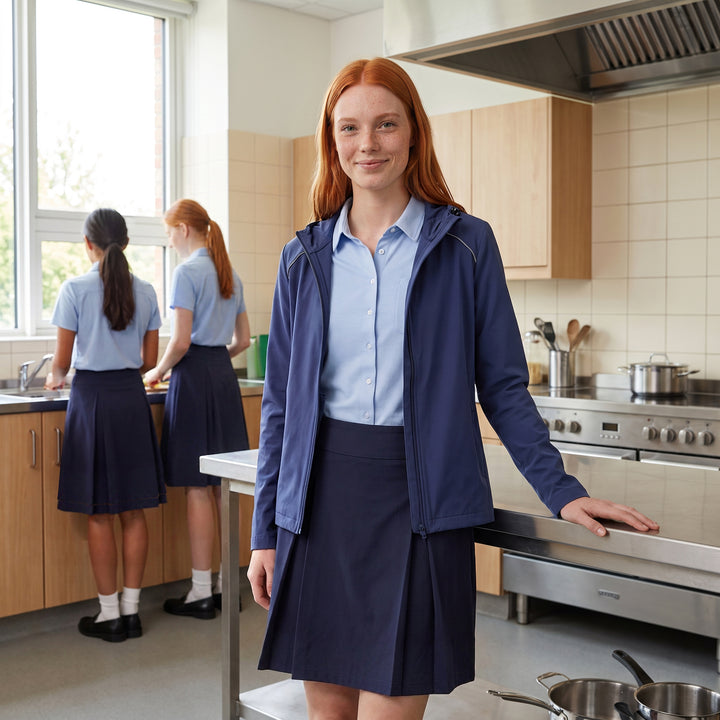
Designing for children, not institutions
What we know about how children’s clothing should be designed, and how far most school uniforms fall short of that standard.
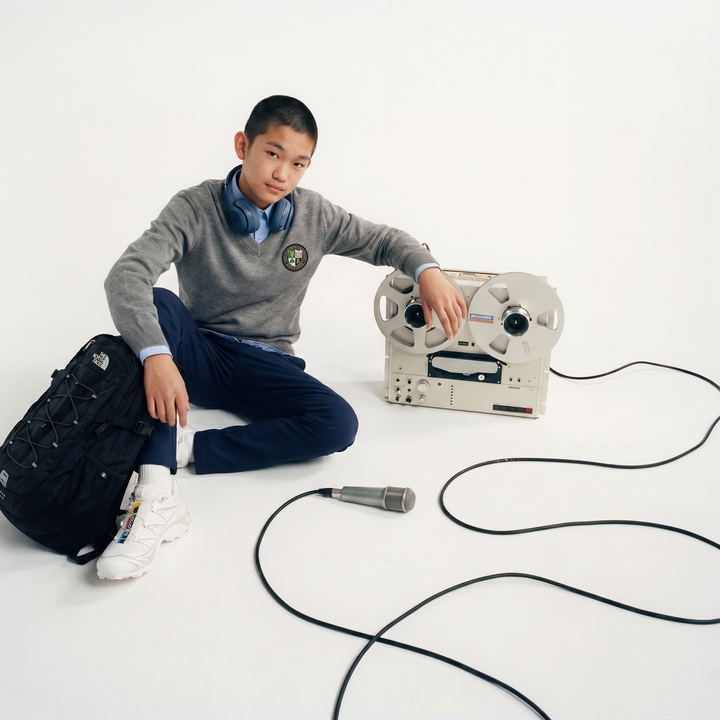
09 Functional children’s clothing: design challenges and opportunities
“Functional textiles and clothing designed for children should provide a safe and supportive environment, encompassing comfort, safety, health, wellbeing, and cognitive development.”
Santiago, Cabral & Cunha, 2024 · MDPI Applied Sciences
“Ergonomics, prioritising physical comfort and wellbeing, is crucial in children’s clothing design.”
Santiago, Cabral & Cunha, 2024
“Clothing designed for children should not only meet their expectations but also actively promote exploration and curiosity.”
Santiago, Cabral & Cunha, 2024
“Current children’s clothing often lacks anthropometric evaluations, resulting in poor fit and diminished comfort.”
Santiago, Cabral & Cunha, 2024
The numbers
The evidence, at a glance
of the variance in exam performance is explained by clothing comfort alone.
Bell, Schutz & Cardello · FCS Research Journal
of test-score variance accounted for by thermal discomfort, across 409 students tracked over three seasons.
Hoque & Weil, 2016 · UMass Amherst
more boys than girls cycle to school in Ireland: 3.7% of boys aged 13-18 vs 0.4% of girls.
CSO Commuting in Ireland
of children experience sensory processing differences that make standard uniforms a source of daily distress.
Sensory research estimate
What we did with this
We read the research. Then we built around it.
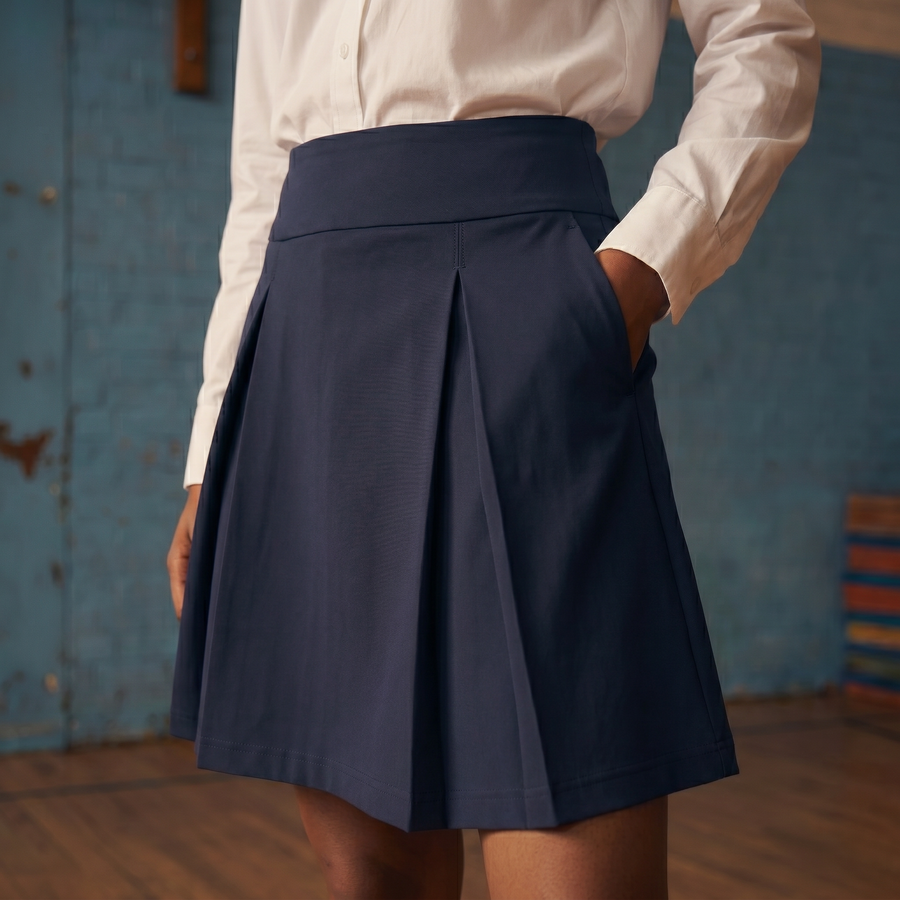
The skirt
- Built-in inner short, so cartwheels and bike racks stop being a calculation.
- Soft, flat waistband: no dig, no roll.
- 4-way stretch fabric, moves with the child.
Answers the Cambridge and Reidy findings on girls and movement.
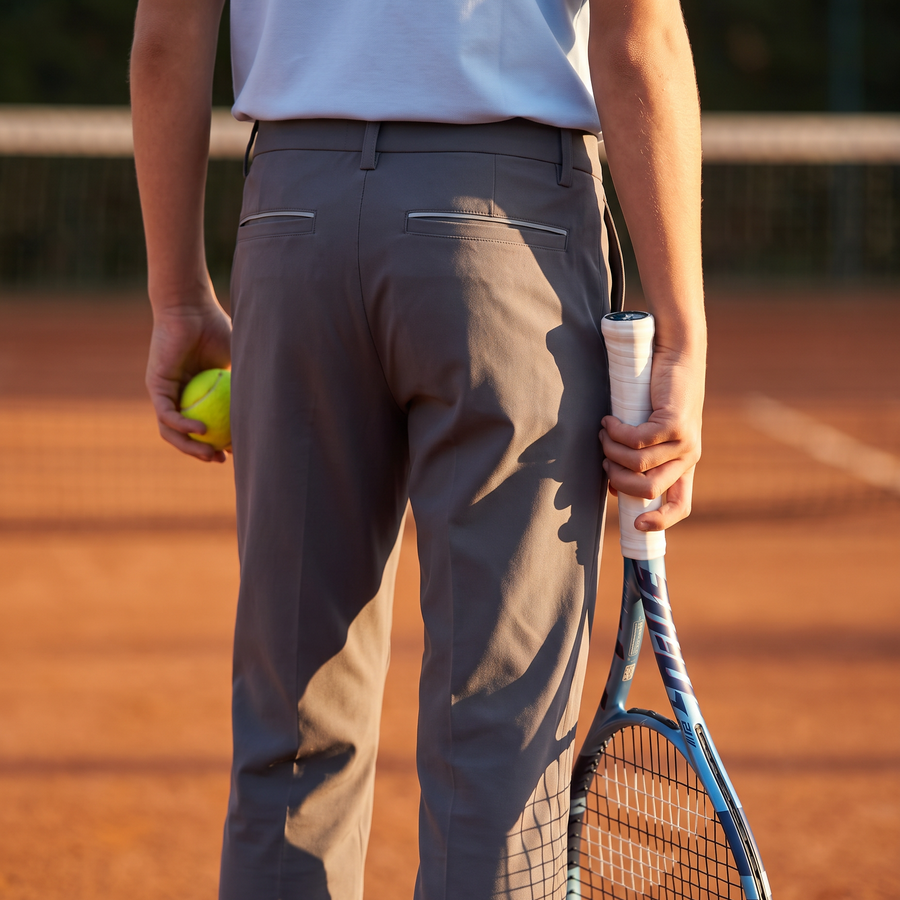
The trouser
- Structured gusset for a full range of movement.
- Soft internal waistband: none of the dig the Pretoria study flags.
- Moisture-managing fabric for the sprint to the bus.
Answers the sensory-trigger list in Jordaan et al., 2024.
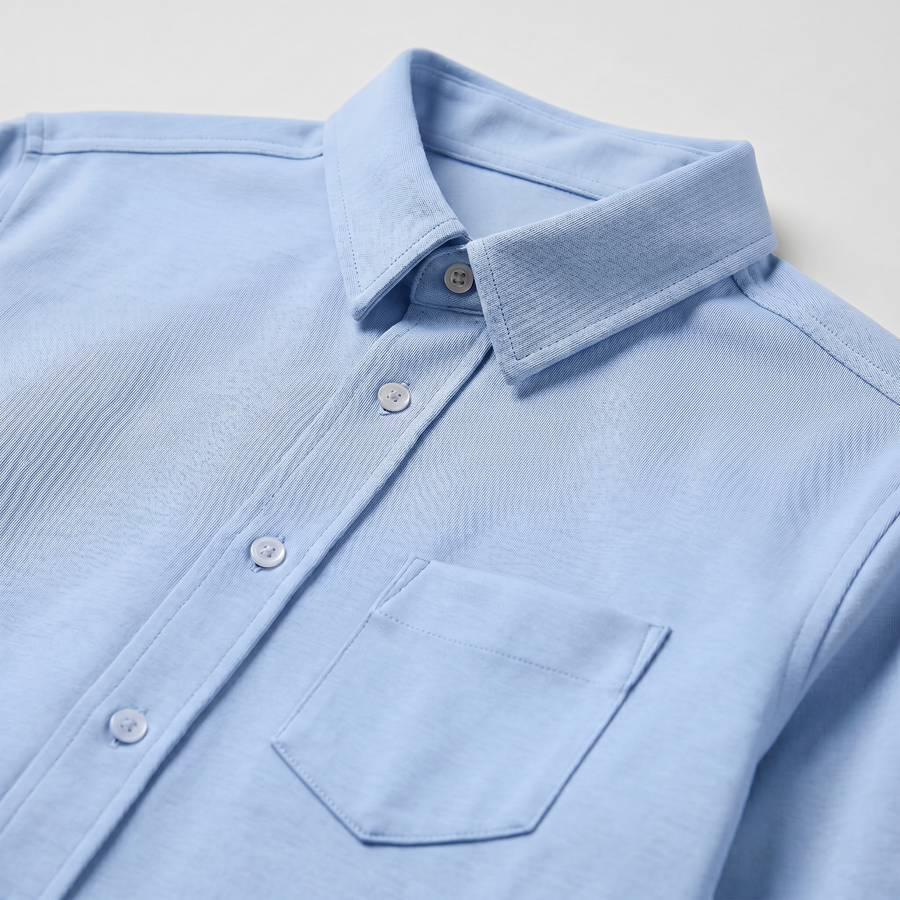
The shirt
- Underarm gusset that keeps it neat without restricting movement.
- No stiff collar: one of the most distressing properties identified by the research.
- Soft against the skin, tag-free.
Answers the collar and seam findings in the sensory research.
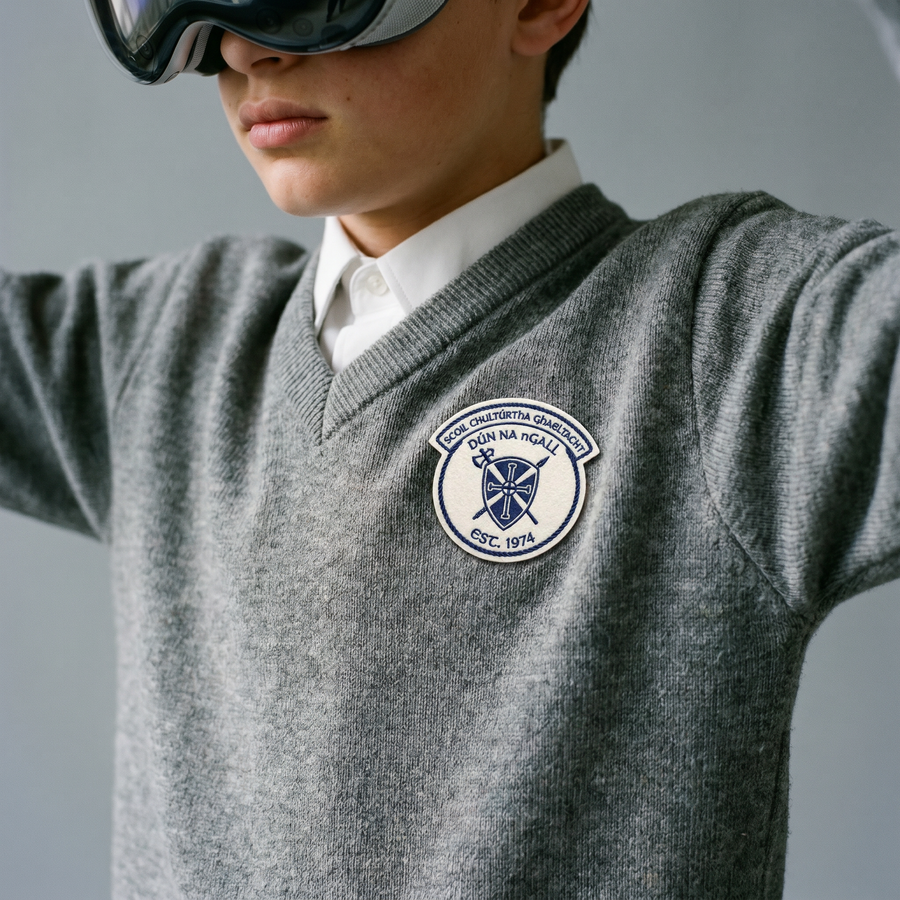
The jumper
- Warm without being scratchy.
- Soft fibres chosen against the rough-texture trigger list.
- Keeps its softness wash after wash: new shouldn’t mean hardest to wear.
Answers the second-hand-preference finding: comfort from day one.
Pass this on
The research is here. It just needs to travel.
There’s a lot of research on this page. We know that. So we’ve pulled the most important findings into a short summary: one page, plain language, designed to share. Leave your WhatsApp number or email address below and we’ll send it to you. Forward it to the parents’ WhatsApp group. Paste it into the school newsletter. Pass it to your principal.
You're in. Research is on its way to your WhatsApp.
Pass this along
We'll send you the research. Unsubscribe any time.
3,900 schools on file
Is your school in?
Register and we'll send the research to share with your school community.
The full uniform list is live: sizes, prices, and delivery to your door before term starts.
Not yet - but it's close.
You're in. Research is on its way to your WhatsApp.
Pass this along
We will send you the research. Unsubscribe any time.
Sources
References
- Bell, Schutz & Cardello. Clothing comfort and exam performance. Family and Consumer Sciences Research Journal. researchgate.net/publication/227956763↩
- Bell, Schutz & Cardello. Fabric comfort and visual vigilance. Family and Consumer Sciences Research Journal. researchgate.net/publication/9020876↩
- Hoque & Weil, 2016. Classroom comfort and learning outcomes. University of Massachusetts Amherst. researchgate.net/publication/303093884↩
- Jordaan, Diedericks, van Niekerk & Kruger, 2024. School uniforms and sensory overreactivity. Clothing and Textiles Research Journal (SAGE). journals.sagepub.com/doi/10.1177/0887302X241248987↩
- Ryan, van Sluijs et al., 2024. School uniforms and physical activity: 135 countries. University of Cambridge. mrc-epid.cam.ac.uk↩
- Reidy, 2021. School uniform as a public health issue. Public Health Reviews (Frontiers / PMC). ncbi.nlm.nih.gov/pmc/articles/PMC8713481↩
- Systematic review: 1,098,972 children. Frontiers in Sports and Active Living, 2025. Source link to follow.↩
- Nathan et al., 2021. The AWARE randomised controlled trial: 42 schools. Source link to follow.↩
- Santiago, Cabral & Cunha, 2024. Functional children’s clothing: design challenges and opportunities. MDPI Applied Sciences. mdpi.com/2076-3417/14/11/4472↩
